Yesterday we were treated to the unusual intersection of vernal equinox and a full moon. Here was a nice moment when hours of sunshine were balanced by hours of - wait - moonshine? Let's say moonlight, rather. If you follow your horoscope (and if you don't) this coincidence of full moon and equinox means no more than an interesting astronomical curiosity in your life.
I am guilty of neglecting regular posts for most of the last year, but I'll try again to stay more up to date.
It's been a strong winter in the Sierra, with much more than average snowpack on the ground. It seems like we've had just one week without a storm since the end of January. As in other recent years, the snowline is higher than the historic average although Yosemite Valley got some heavy storms in February that damaged a lot of trees and the buildings beneath them. The Merced is running above average and the waterfalls are all at healthy volumes. Here's hoping for a gradual warming of spring that'll have the falls flowing well through the summer, instead of draining snowfields in a short burst.

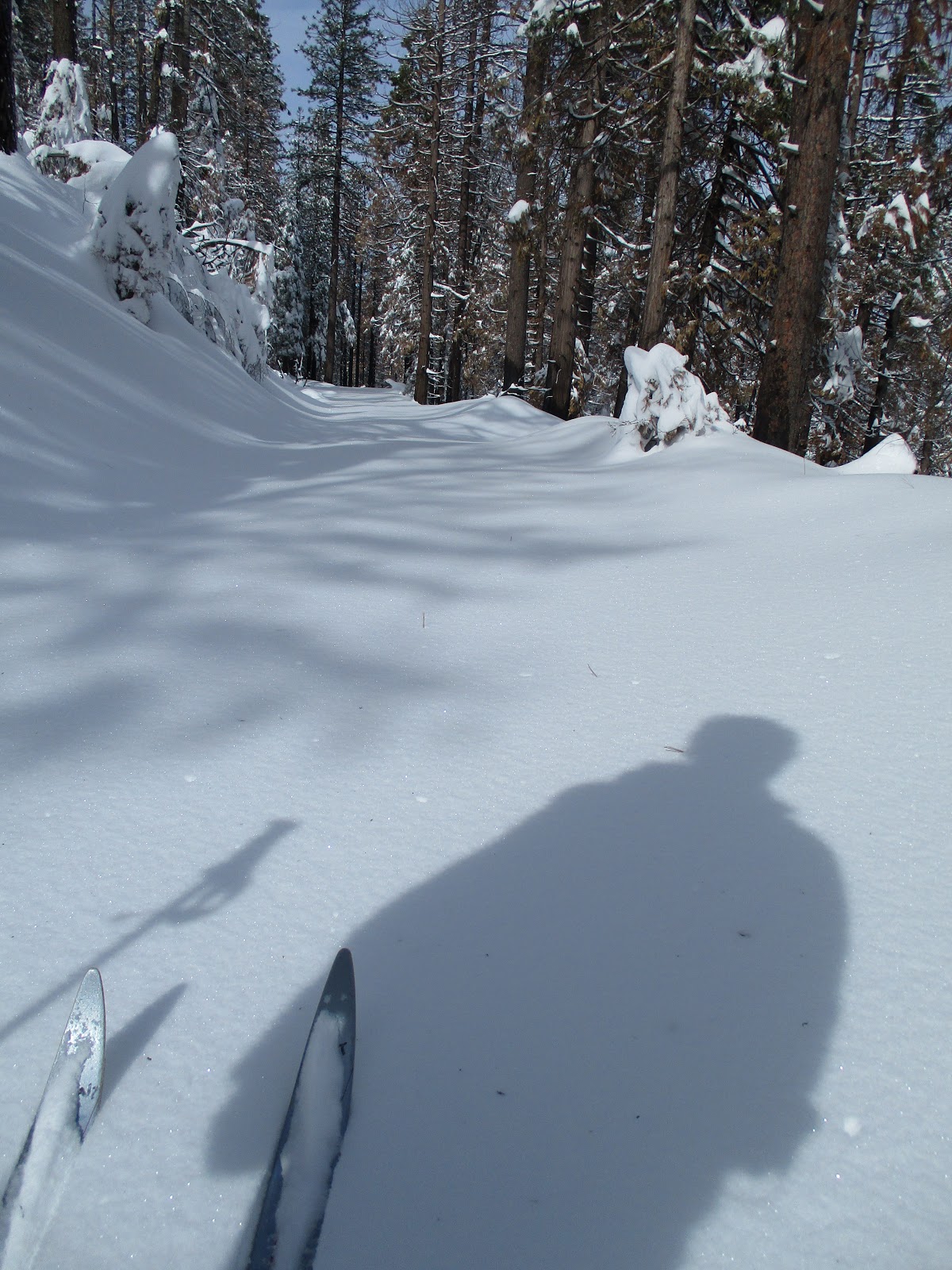
The burned area of last summer's Ferguson Fire (shown here with a skier) has shed a bit of sediment (mostly from the South Fork) in storms but nearly all of that fire was of low intensity and is greening up nicely now. For all the rain and runoff we've had, there wasn't much intense rainfall and we haven't had the rockfalls along Hwy. 140 that we worried about. Not many trees were killed by that fire (lots of already dead trees didn't even burn) and the forest is healthier for it. Burned or not, as with much of California, it's looking like a good wildflower season. Kumlienia started in January, and the rocky banks that were cooked black in August are now coated in greenery and flowers. Poppies, popcorn flower, baby blue-eyes and fiddlenecks are already at photogenic quantities in the Merced Canyon, but are still densifying toward their peaks.
I am again leading trips to Yosemite's sister national parks in China. Mountain Travel Sobek has us headed to explore the natural and cultural history of Jiuzhaigou and Huangshan and to meet with park rangers to learn about China's park management. Hiking in both parks is truly astounding and I can't wait to get back there.